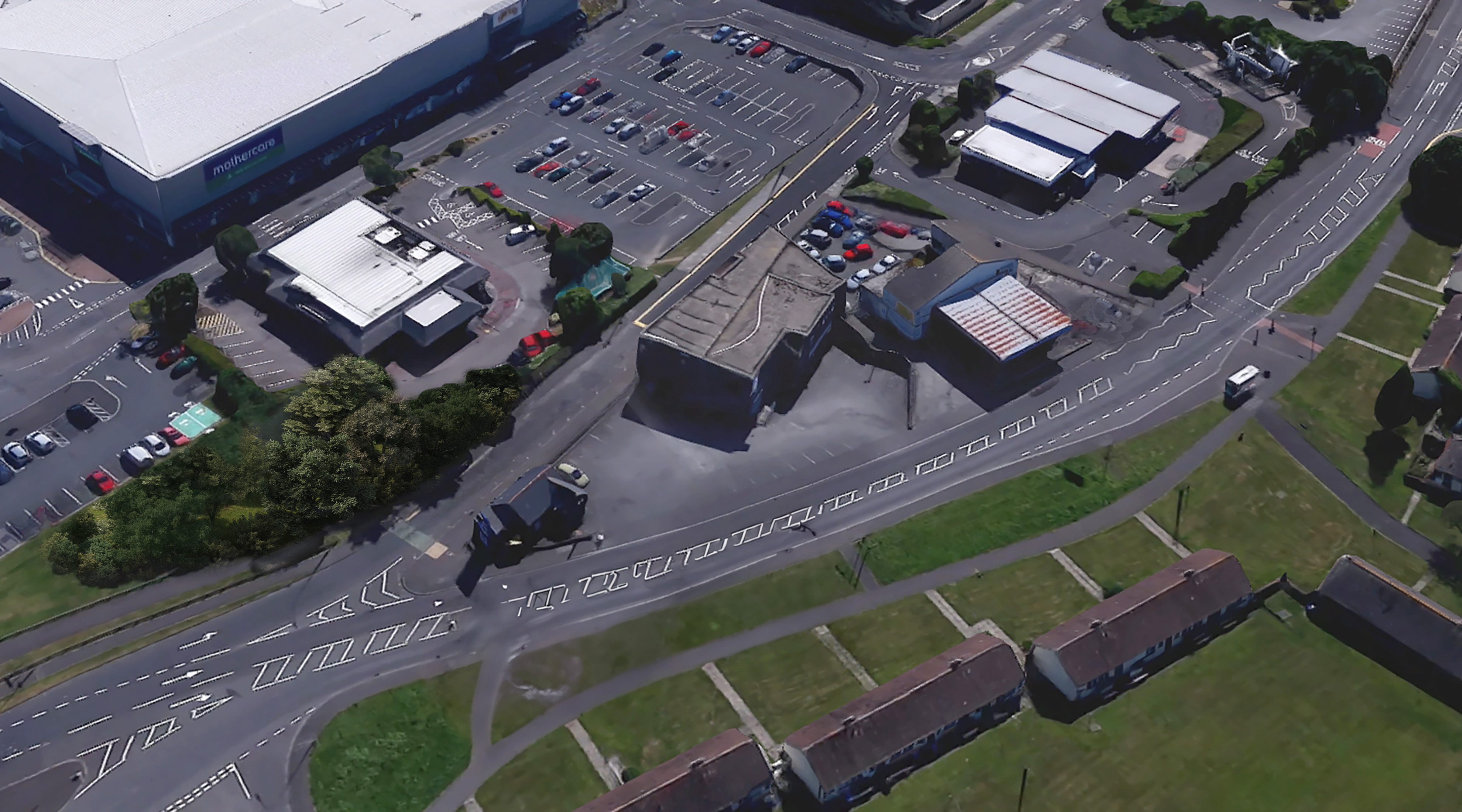
EV charging infrastructure is being built out at pace, and behind every charging hub and roadside site is a set of drawings — site layouts, lease plans, electrical schematics, civils drawings, and an as-built record. This guide explains what CAD work an EV charging project involves, why the multi-site nature of a rollout changes how that work should be approached, where the line sits between electrical design and drawing production, and how to resource it.
It is written for EV charging operators, developers, and the engineering and installation firms delivering charging infrastructure.
EV charging is infrastructure, not construction
The most useful thing to understand about EV charging CAD is that it behaves like infrastructure work rather than one-off construction. A charging network is many similar sites, each needing the same package of drawings, delivered continuously as sites are acquired and built. It is far closer to a telecoms network rollout than to a single building project.
That distinction matters because it changes what “good” looks like. On a single project, the drawings just need to be correct. On a rollout, they need to be correct and consistent across every site, produced to a repeating standard, and delivered at a pace that keeps up with site acquisition. The firms that struggle with EV charging CAD are usually the ones treating each site as a fresh project rather than the programme as the unit of work.
The drawing package for an EV charging site
A typical EV charging site moves through a consistent set of drawings:
- Site layout and general arrangement drawings show charger positions, bays, access, and equipment locations — the drawing everything else works from.
- Lease plans define the leased area, equipment footprint and access for the site agreement, and are usually needed early because the lease precedes installation.
- Electrical schematics and single-line diagrams show power distribution from supply to chargers, produced from the electrical design.
- Cable routing drawings show containment and duct routes across the site.
- Civils and groundworks drawings cover foundations, equipment bases, ducting and trenching.
- As-built drawings record what was actually installed at completion — the operational reference for the whole estate over time.
- 3D renders visualise the proposed hub for planning, landlord and investor presentations, and stakeholder engagement.
For more details, visit CAD drawings for ev charging sites.
Where electrical design ends and drawing production begins
This is the boundary worth being clear about before outsourcing any of it. An EV charging site involves real electrical engineering: load calculations, protection design, cable sizing, and the DNO connection design. Those are engineering decisions carried out by a qualified electrical engineer, and responsibility for them stays there.
Drawing production is a separate activity. It takes that electrical design, together with the site survey and layout information, and turns it into the schematic drawings, single-line diagrams, cable routing drawings and the rest of the package. This is the part that outsources cleanly — it is production work that benefits from consistency and capacity, and it carries no design liability as long as the boundary is respected.
A good CAD partner for EV charging is explicit about this line. They produce drawings from your design; they do not quietly take on design decisions that should sit with your engineer.
The multi-site challenge
The defining challenge of EV charging CAD is volume and repetition. A rollout is not one drawing package, it is the same package repeated across every site, and the way that work is organised determines whether it runs smoothly or becomes the constraint on the whole programme.
Three things separate a well-run EV charging drawing programme from a struggling one. The first is a single documented drawing standard applied to every site, so site eighty looks like site one. The second is a shared register tracking the drawing status of the whole estate, so the operator can see the state of the rollout at a glance. The third is drawing capacity that scales with the pipeline — absorbing the weeks when several sites need drawings at once without carrying that cost through the quieter periods.
These are the same disciplines that make a telecoms rollout work, which is why firms with multi-site infrastructure experience tend to handle EV charging CAD well.
Resourcing the drawing work
EV charging operators generally have three options for the drawing work: build an in-house drawing team, use their installation contractor’s drawing resource, or outsource to a specialist CAD partner.
An in-house team gives the most control but carries fixed cost through the whole rollout, including the quieter periods, and requires the operator to manage drawing production as a discipline. Relying on the installation contractor keeps it bundled but often produces inconsistent drawings across sites, because different contractors on different sites draw differently. Outsourcing to a specialist gives consistent output to a single standard across the whole programme, with capacity that flexes to the pipeline — provided the partner is set up for multi-site work rather than one-off jobs.
How Outsource CAD helps
Outsource CAD produces the full CAD and render package for EV charging infrastructure — site layouts, lease plans, electrical schematics, cable routing, civils, as-builts and photorealistic renders — working from your electrical design and site information, to your drawing standards, across your whole programme.
Multi-site infrastructure is our background. Our founder previously built and ran a specialist telecoms CAD company delivering multi-site design programmes across the UK and Ireland before it was acquired, so the disciplines an EV rollout needs — consistent standards, shared tracking, scalable throughput, reliable as-builts — are how we already work.
Call +44 28 9009 8876 or email info@outsourcecad.com to discuss your rollout.
Frequently Asked Questions
What CAD drawings does an EV charging site need?
Site layout and GA drawings, lease plans, electrical schematics and single-line diagrams, cable routing drawings, civils and groundworks drawings, and as-built record drawings — plus 3D renders for planning and presentation.
Do CAD firms design the electrical installation?
A drawing production service does not. The electrical design — load calculations, protection, cable sizing, DNO connection — is carried out by the electrical engineer. The CAD work turns that design into the drawing package. Be wary of any arrangement that blurs this line.
Why does multi-site experience matter for EV charging CAD?
Because a rollout is many similar sites needing consistent drawings at pace. Firms experienced in multi-site infrastructure — telecoms rollouts in particular — apply a single standard across every site, track the whole programme on a shared register, and scale capacity to the pipeline. Firms that treat each site as a one-off project tend to produce inconsistent output.
Can renders be used for planning applications?
Yes. Photorealistic renders of a proposed charging hub are widely used for planning submissions, landlord and investor presentations, and stakeholder engagement, showing the site before construction.
Should we build an in-house drawing team or outsource?
It depends on volume and how steady it is. An in-house team gives control but carries fixed cost through quieter periods. Outsourcing to a multi-site specialist gives consistent output and capacity that flexes with the rollout. Many operators outsource the drawing production while keeping the electrical design in-house or with their engineer.